
Can One Poster Outside Your Shop Really Increase Footfall?
A simple step‑by‑step way to use and track a single poster that brings more people through your door.

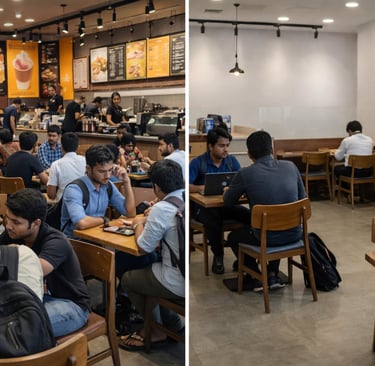
A single poster outside your store might look small, but it can work very hard for your business. When done well, a poster can catch attention, explain an offer quickly and push people to step inside instead of walking past. The real question is not only “Can it work?” but “How will you know it is working?”
This blog explains how one poster can increase footfall in a simple, practical way and how you can track the results without complex tools or big budgets.
Why a single poster can work
A poster is often the first thing people see before they notice your logo or window display. It can act like a friendly salesperson at the door.
· It stops people for a second and gives them a reason to look at your store.
· It can highlight one clear benefit, such as a discount, new product, free sample or time bound offer.
· It works all day, even when your staff are busy with existing customers.
The key is focus. A poster that tries to say everything usually does nothing. A poster with one strong message is easier for people to understand while walking.
Step 1: Decide the goal of your poster
Before you print anything, decide what you want this one poster to achieve. Different goals need different messages
·Do you want more new visitors who have never entered before?
· Do you want existing customers to visit more often?
·Do you want to push one specific product or service?
For example, a café might use “Cold coffee at 99 today” to attract impulse walk ins on a hot afternoon, while a stationery shop might use “ID card printing in 10 minutes” to help students solve an urgent problem.
Step 2: Place the poster where people actually look
Many stores place posters too high, too low or behind glass that reflects light. To increase footfall, your poster must sit directly in the line of sight of people walking past.
· Position it at eye level, roughly between chest and head height for an average adult.
· Angle it slightly towards the pavement so it is visible from a distance.
· Keep the area around it clean and uncluttered so it does not compete with many other messages.
If your store is in a busy Bengaluru street, watch where pedestrians naturally look as they walk. You may find that a poster on the side panel of your entrance or on a glass door works better than one stuck somewhere inside the window.
Step 3: Keep the message short and readable
Someone walking past your store has only a few seconds to read your message. That is why the design and wording of the poster matter as much as the offer.
·Use a large, clear headline such as “50 percent off on notebooks this weekend” or “Free dessert with every main course today”.
· Limit body text to one or two short lines that explain the details.
· Choose high contrast colours, such as dark text on a light background, so it is easy to read in bright sunlight.
Avoid small fonts, fancy scripts and long lists. If people have to stop and decode the text, most of them will not bother.
Step 4: Create a simple way to track footfall from the poster
Here is the most important part. To know whether your poster is working, you need a way to link it to actual actions inside the store. There are several easy methods.
1. Use a unique offer code
Print a small line such as “Show this poster and say ‘NOTE10’ for 10 percent off”. Train your staff to note how many customers use this code at billing.
2. Use a specific price or combo only mentioned on the poster
For example, “Tea and samosa combo at 59”. When someone orders that exact combo, you can reasonably assume that the poster has played a role.
3. Ask a simple question at the counter
When you are not very busy, your staff can ask “How did you hear about this offer?” and keep a basic tally mark sheet behind the counter. Customers who say “I saw it outside” show direct impact.You do not need special software. A notebook or a basic spreadsheet updated daily is enough to start.
Step 5: Compare numbers before and after
Once your tracking method is in place, compare numbers across a few time periods. This helps you see whether the poster has made a real difference.
· Note your average daily footfall or average number of orders for a week without the poster.
· Put up the poster and track for the next one or two weeks.
· Compare not just total visitors, but also the number of people who used the poster offer or code.
If you see a clear increase in walk ins or in use of the offer, the poster is pulling its weight. If not, try changing one element at a time: the headline, colours, offer or placement. Small changes can lead to better results.
Step 6: Learn and repeat what works
The real value of tracking is not only this one poster, but what you learn for future campaigns.
·Note which messages bring in more people, for example “limited time offer”, “today only” or “new arrivals”.
· Note which formats work better, such as bright colour backgrounds, large photos of food or simple text only designs.
· Use those learnings the next time you create posters for festivals, sale seasons or new launches.
Over time you build a small library of “winning” poster ideas that you can reuse with updated offers, which saves time and design effort.
CONCLUSIONS
A single, well planned poster will not replace all your marketing, but it can clearly lift walk in numbers when you treat it like a small experiment. Choose one strong offer, place the poster where people actually look and track responses with a simple code or question at the counter. Over a few weeks you will know whether that design works for your audience and you can repeat the winning idea with new offers, seasons and products to keep footfall growing steadily.
Connect with us!
Your trusted printing partner in Bengaluru.
Follow Us On
Contact Us
+91 90080 00674
+91 93425 55558
+91 94484 76930
© 2025. All rights reserved.